Air embolisms can be prevented

SUMMARY
Preventing the entrance of air into the patient’s circulatory system can result in tangible budget savings for the healthcare provider.
- Vascular air embolism (VAE) illustrates a significant financial burden for hospitals. VAE complications costs the healthcare system, on average, $66,007 per incident.
- In the case of severe multiple complications which may require full ICU treatment, a healthcare provider may save up to 56,670 € per prevented event.
Centers for Medicare and Medicaid Services includes air embolism as a preventable and non-reimbursable event in the United States
A hospital acquired condition (HAC) is one of several medical diagnoses a patient can develop during a hospital stay that was not present on admission.10
- In 2008, a provision of the Deficit Reduction Act of 2005 known as Medicare “Nonpayment” went into effect, eliminating reimbursement for the marginal costs of preventable HACs, including air embolism.11
- In 2015, the federal HAC Reduction Program requires the Centers for Medicare & Medicaid Services to reduce payments by 1% for hospitals in the top quartile of risk adjusted national HAC scores.12
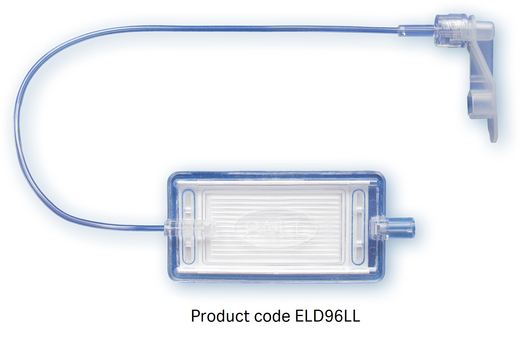
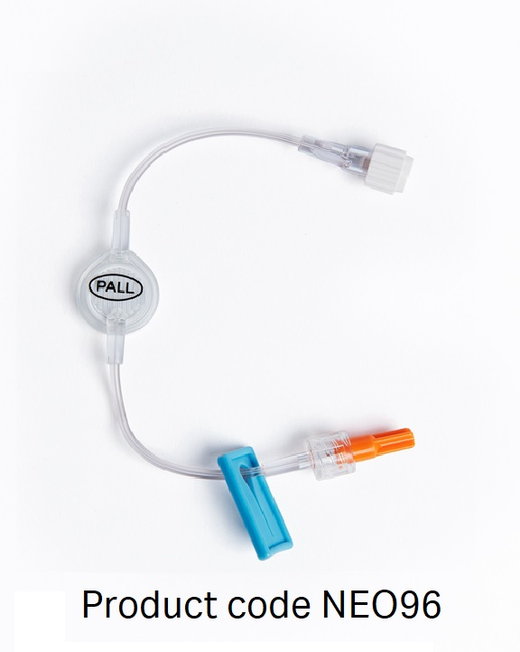
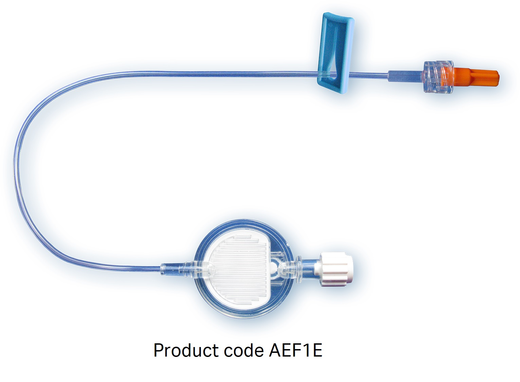
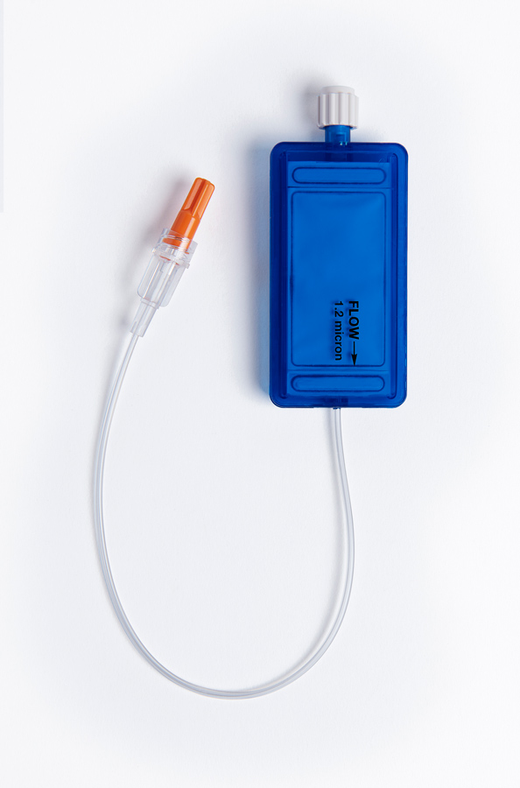
- Hospitals may consider the use of IV in-line filters to prevent the risk of air embolism associated with central venous access devices.
The National Quality Forum declares air embolism as a “Serious Reportable Event” aka “Never Event”
The National Quality Forum (NQF) is a not-for-profit, nonpartisan, membership-based organization that works to catalyze improvements in healthcare. Preventing adverse events in healthcare is central to NQF’s patient safety efforts. The term "Never Event" was first introduced by the NQF, in reference to particularly shocking medical errors that should never occur.13 To ensure that all patients are protected from injury while receiving care, NQF has developed and endorsed a set of Serious Reportable Events (SREs) aka “Never Events”. This set is a compilation of serious, largely preventable, and harmful clinical events, designed to help the healthcare field to assess, measure, and report performance in providing safe care.14
Vascular air embolism is considered as a serious reportable event according to the National Quality Forum 2011 update.15 Hospitals, outpatient/office-based surgery centers, ambulatory practice settings/office-based practices, long-term care/skilled nursing facilities may consider the use of IV in-line filters to prevent the risk of air embolism.
Explore our IV air eliminating solutions
References
- Rowland HT. (2009). When never happens: Implications of Medicare’s never event policy. Marquette Elder’s Advi; 10: 341-82
- Bhananker S.M. et al. (2009). Liability related to peripheral venous and arterial catheterization: A closed claims analysis. Anesth Analg; 109: 124-9
- Domino K.B. et al. (2004). Injuries and liability related to central vascular catheters: A closed claims analysis. Anesthesiology; 100: 1411-8
- Lee S., Bulsara K.R. (2020). Assessing the Efficacy of Commercially Available Filters in Removing Air Micro-Emboli in Intravenous Infusion Systems. J Extra Corpor Technol; 52: 118-25
- Mirski et al.2007, Perdue 2001, Wittenberg 2006 Diagnosis and treatment of vascular air embolism. Anesthesiology 2007; 106(1): 164-77
- Josephson DL. Risks, complications, and adverse reactions associated with intravenous infusion therapy. In: Josephson DL. Intravenous infusion therapy for medical assistants.The American association of Medical Assistants. Clifton Park: Thomson Delmar Learning 2006; 56-82
- Souders JE. Pulmonary air embolism. J Clin Monit Comput 2000; 16(5-6): 375-83
- Lamm G, Auer J, Punzengruber C, Ng CK and Eber B. Intracoronary air embolism in open heart surgery – an uncommon source of myocardial ischaemia. Int J Cardiol 2006; 112(3): 85-6
- Demaerel P, Gevers AM, De Bruecker Y, Sunaert S and Wilms G. Gastrointest Endosc. Stroke caused by cerebral air embolism during endoscopy 2003; 57(1): 134-5
- Center for Medicare and Medicaid Services. (2020). Publicly Reported DRA HAC Measures - Frequently Asked Questions from https://www.cms.gov/files/document/frequently-asked-questions-publicly-reported-deficit-reductionact-dra-hospital-acquired-condition.pdf [accessed 02/23/2021]
- Kornkven A. (2020). The Impact of Medicare Nonpayment: A Quasi-Experimental Approach from
https://sites.duke.edu/djepapers/files/2020/06/audreykornkven-dje.pdf [accessed 02/23/2021] - Mariano E Menendez M.E. and David Ring D. (2015). Do hospital-acquired condition scores correlate with patients' perspectives of care? Qual Manag Health Care; 24(2): 69-7
- Patient Safety Network (2021). Never Events from https://psnet.ahrq.gov/primer/never-events [accessed 02/23/2021]
- National Quality Forum (2021). Serious Reportable Events from
http://www.qualityforum.org/topics/sres/serious_reportable_events.aspx#:~:text=Serious%20Reportable%20Events%20aka%20%22Ne
ver%20Events%22&text=This%20set%20is%20a%20compilation,performance%20in%20providing%20safe%20care [accessed
02/23/2021] - National Quality Forum (2021). List of Serious Reportable Events (aka SRE or "Never Events") from http://www.qualityforum.org/Topics/SREs/List_of_SREs.aspx [accessed 02/23/2021]
Need expert help with medical filtration? We can assist you!
Our in-line IV filters