Infusion line particulate contamination

SUMMARY:
Particles in infusion lines are invisible to the naked eye but can cause severe harm, including vascular blockages, systemic hypercoagulability, impaired microcirculation, and inflammatory reactions. A video by Perez M. et al. 2018 makes those particles visible.
Most likely, you haven’t seen particles infused into a patient. If more healthcare professionals could see what they inadvertently infuse into a patient, they would probably be more willing to do something about it.
Watch the video and see the motion of particles at the egress of a catheter 1.
Detection of particles at the Egress of the Catheter by the Qicpic Instrument
Perez M, Décaudin B, Abou Chahla W, Nelken B, Storme L, Masse M, et al. Effectiveness of in-Line Filters to Completely Remove Particulate Contamination During a Pediatric Multidrug Infusion Protocol. Sci Rep. 2018;8:7714 https://doi.org/10.1038/s41598-018-25602-6.
Video can be obtained from Electronic supplementary material under https://www.nature.com/articles/s41598-018-25602-6#additional-information
Link to Public License: https://creativecommons.org/licenses/by/4.0/legalcode
Link to the Creative Commons license: http://creativecommons.org/licenses/by/4.0/
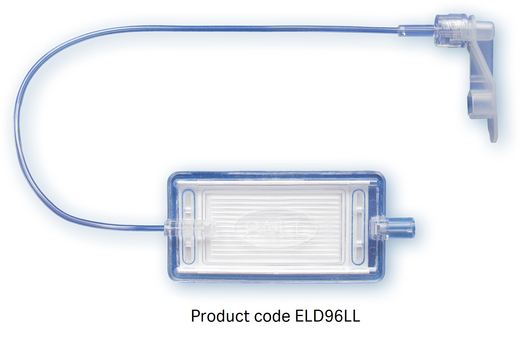
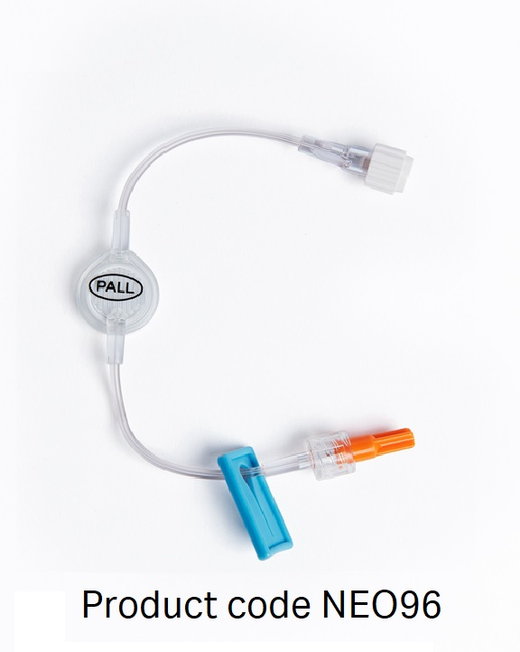
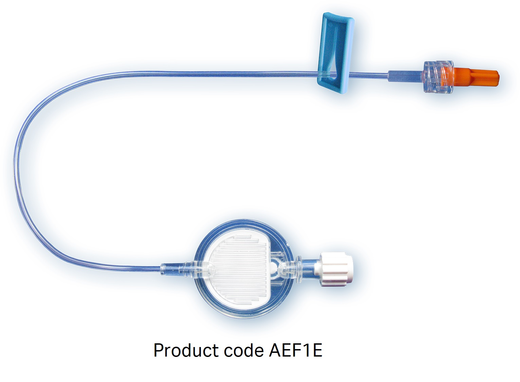
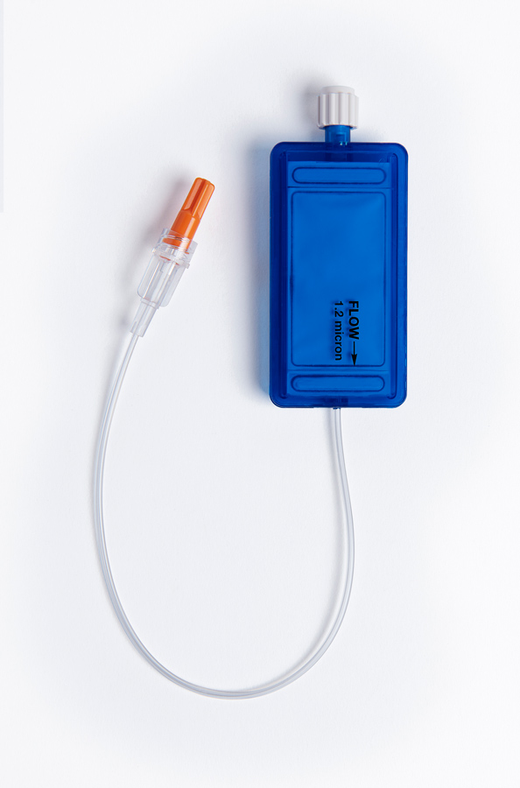
The video was produced in the context of a study conducted by Maxime Perez, a hospital pharmacist at the University of Lille, France, and his colleagues at the university’s neonatology and intensive care departments. The authors measured particles in simulated multi-drug infusions over a 24-hour period, using various combinations of catheters, single- and multi-lumen infusion and extension sets, stopcocks and central venous lines, with or without Pall Medical intravenous in-line filters (AEF1NTE). What is shown in the video is that particles had precipitated at the distal end of IV infusion lines, and which were invisible to the naked eye. In addition, the authors demonstrated that adding extension sets or stopcocks significantly increases overall particulate matter, and that a Pall Medical IV intravenous in-line filter (AEF1NTE) connected to the ventral venous catheter significantly decreased the overall particulate contamination compared to infusions without filters.
In light of the potentially serious damage particles can cause – blockages of blood vessels due to large particles (2-4), systemic hypercoagulability due to the activation of the coagulation system(5), impairment of the microcirculation (6-7), immune-modulation effects and / or systemic inflammatory reactions (5,8-11) – the authors stress two clear conclusions of this study:
- Intravenous in-line filters effectively prevent particle administration to patients.
- Intravenous in-line filters should be positioned as closed as possible to the patient.
Regarding the placement of IV intravenous filter the Infusion Nursing Society (INS) and the American Parenteral Nutrition Society (ASPEN) recommend:
- "Locate the in-line filter on the administration set as close to the VAD hub as possible. Add-on components (e.g., extension sets, stopcocks) below or after the filter will result in additional particulate matter infusing to the patient." (12)
- "Filters should be placed as close to the patient as possible on the administration system." (13)
Explore our IV filtration solutions
FAQs
Why is particulate contamination in infusion lines a concern?
Particles can block blood vessels, activate coagulation, impair microcirculation, and trigger systemic inflammation. 2-11
What did the study by Perez M. et al. 2018 reveal?
The study showed that in-line filtration is effective in reducing particulate matter and their position in the infusion line is important. 1
How do IV in-line filters help?
They act as the last barrier, preventing particles from entering the patient’s bloodstream and reducing infusion-related complications. 1
What risks are associated with particle infusion?
Blockages of blood vessels, systemic hypercoagulability, microcirculation impairment, and immune modulation and inflammation effects. 2-11
References
- Perez M, Décaudin B, Abou Chahla W, Nelken B, Storme L, Masse M, et al. Effectiveness of in-Line Filters to Completely Remove Particulate Contamination During a Pediatric Multidrug Infusion Protocol (Electronic Supplementary Material). Sci Rep. 2018;8(1):7714. Published 2018 May 16. doi:10.1038/s41598-018-25602-6.
- Ilium L, Davis SS, Wilson CG, Thomas NW, Frier M, Hardy JG. Blood clearance and organ deposition of intravenously administered colloidal particles. The effects of particle size, nature and shape. Int J Pharm. 2018;12(2):135-146. https://doi.org.10.1016/0378-5173(82)90113-2.
- Bradley JS, Wassel RT, Lee L, Nambiar S. Intravenous ceftriaxone and calcium in the neonate: assessing the risk for cardiopulmonary adverse events. Pediatrics. 2009;123(4):e609-e613. doi:10.1542/peds.2008-3080.
- Puntis JWL, Wilkins K, Ball P, Rushton D, Booth I. Hazards of parenteral treatment: do particles count? Archives of Disease in Childhood. 1992;67:1475-1477. doi:10.1136/adc.67.12.1475.
- Boehne M, Jack T, Kӧditz H, Seidemann K, Schmidt F, Abura M, et al. In-line filtration minimizes organ dysfunction: New aspects from a prospective, randomized, controlled trial. BMC Pediatrics. 2013;13(21):1-8.
- Kirkpatrick CJ, Rangoonwala R, Reshetnykov M, Barbeck M, Ghanaati S. Non-Equivalence of Antibiotic Generic Drugs and Risk for Intensive Care Patients. Pharmaceut Reg Affairs. 2013;2(1):1-7.
- Schaefer SC, Bison PA, Rangoonwala R, Kirckpatrick CJ, Lehr H-A. 0.2 µm in-line filters prevent capillary obstruction by particulate contaminants of generic antibiotic preparations in postischemic muscle. Chemother J. 2008;17(4):172-178.
- Jack T, Boehne M, Brent BE, Hoy L, Kӧditz H, Wessel A, et al. In-line filtration reduces severe complications and length of stay on pediatric intensive care unit: a prospective, randomized, controlled trial. Intensive Care Med. 2012;38:1008-1016. https://doi.org/10.1007/s00134-012-2539-7.
- Jack T, Brent BE, Boehne M, Müller M, Sewald K, Braun A, et al. Analysis of particulate contaminations of infusion solutions in a pediatric intensive care unit. Intensive Care Med. 2010;36:707-711. https://doi.org/10.1007/s00134-010-1775-y.
- Schmitt E, Meybohm P, Herrmann E, Ammersbach K, Endres R, Lindau S, et al. In-line filtration of intravenous infusion may reduce organ dysfunction of adult critical patients. Critical Care. 2019;23(1):373. Published 2019 Nov 22. doi:10.1186/s13054-019-2618-z.
- Chisholm CF, Behnke W, Pokhilchuk Y, Frazer-Abel AA, Randolph TW. Subvisible Particles in IVIg Formulations Activate Complement in Human Serum. J Pharm Sci. 2020;109(1):558-565. https://doi.org/10.1016/j.xphs.2019.10.041.
- Gorski LA, Hadaway L, Hagle ME., Broadhurst D, Clare S, Kleidon T, et al. Infusion Therapy Standards of Practice, 8th Edition. J Infus Nurs. 2021;44(S1 Suppl 1):S1-S224. doi:10.1097/NAN.0000000000000396.
- Ayers P, Adams S, Boullata J, Gervasio J, Holcombe B, Kraft MD, et al. A.S.P.E.N. parenteral nutrition safety consensus recommendations. JPEN J Parenter Enteral Nutr. 2014;38(3):296-333. doi:10.1177/0148607113511992.
Author bio
Dr. Volker Luibl, MBA
Dr. Luibl is a Sr. Marketing Manager Medical Content with knowledge in medical device and clinical science.
Need expert help with medical filtration? We can assist you!
Our in-line IV filters