Particles in IV solutions, main sources and composition, risk for ICU patients.

SUMMARY:
Patients receiving infusion therapy are at risk from receiving inadvertent particle contamination with studies showing up to one million particles infused daily in ICU patients. The sources and composition of these particles are surprisingly varied.
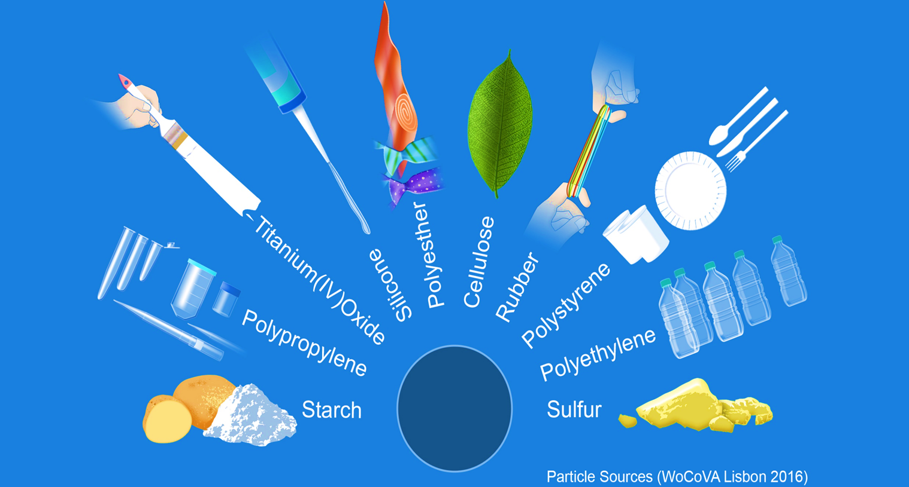
What are the main sources of particles in infusion therapy for ICU patients?
There are three major sources of inadvertent particles in modern infusion therapy.
- A background level of particles from the pharmaceutical ingredient. Usually, the background level is within the regulatory limits of the specific pharmacopeias. Causes of particulate contamination of IV fluids include
- intrinsic particles, defined as those initially associated with the solution which have not been eliminated either by filtration or by precipitation from the solution and
- extrinsic particles, defined as those that contaminate the container or solution during manufacture or preparation of drug solutions.1
- Particles originating from the infusion equipment, such as the container, the infusion tubing & bags, valves, connectors etc. An investigation into the characterization of the particles from an infusion regimen revealed substances such as sulfur, silicone, silicone active mix, cellulose, rubber, starch, polypropylene, polyethylene, polyester, Titanium(IV)oxide (Rutile), polycarbonate, polystyrene and Heliogen Blue.2
- The third arises when different medications come together within the tubing, leading to a chemical precipitate, or to the destabilisation of an emulsion formulation.3
Patients hospitalized in intensive care units (ICUs) are considered a high-risk group for the harm of particles because:
- They receive high volumes of drugs and fluids.
- These drugs and fluids are predominantly administered intravenously.
- Patients commonly require the use of multiple drugs (implying a higher risk of drug incompatibilities).
- Patients receive drugs through a limited number of venous accesses, which contribute to the risk of drug-drug interactions leading to precipitates.
- Patients are immune-compromised.
- Patients require infusion management over a longer period.
Explore our IV particle retention solutions
References
- Perez, M., Maiguy-Foinard A., Barthélémy C., Décaudin B., Odou P. (2016). Particulate Matter in Injectable Drugs: Evaluation of Risks to Patients. Pharm. Technol. Hosp. Pharm.; 1(2): 91 – 103
- BBraun. (2018) Symposium Bremer Intensivkongress - Infusionstherapie In Der Intensivmedizin – Was Sollte Ich Wissen? German Language
- Marsilio, N.R., da Silva, D., Bueno, D. (2016). Drug incompatibilities in the adult intensive care unit of a university hospital. Rev Bras Ter Intensiva.;28(2):147 - 153
Author bio
Dr. Volker Luibl, MBA
Dr. Luibl is a Sr. Marketing Manager Medical Content with knowledge in medical device and clinical science.
Need expert help with medical filtration? We can assist you!
Our in-line IV filters